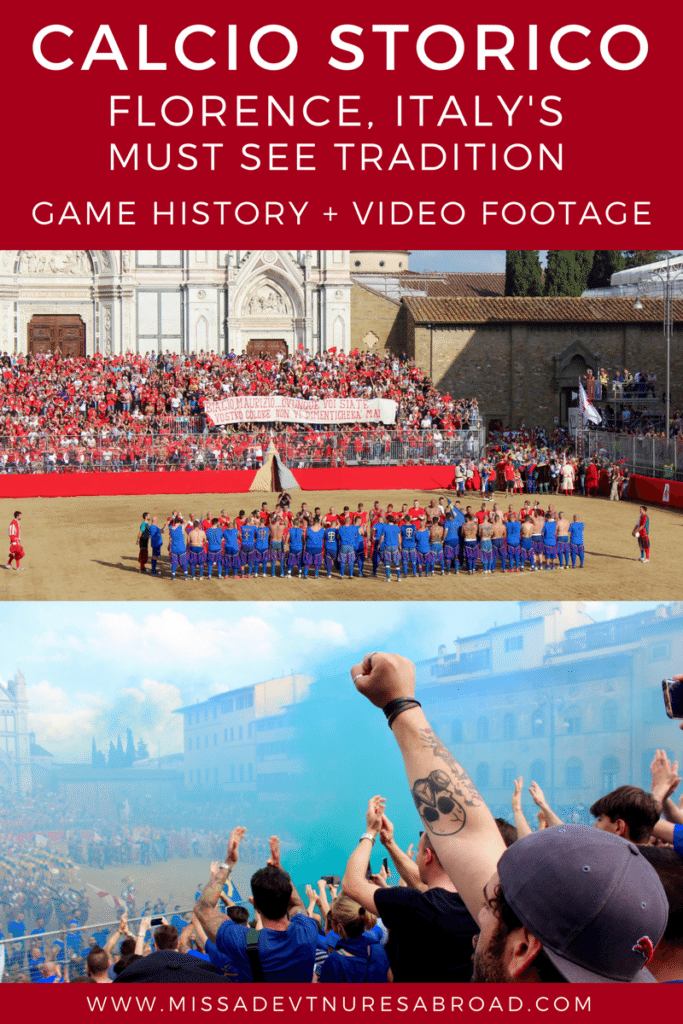
Calcio Storico: Italy’s Most Violent Sport
I was seeing bloody noses and black eyes, linebacker-sized men being body slammed, others throwing kicks, there was even a rugby-sized ball somewhere in the mix. I was watching a picture slideshow in my Italian class of what seemed to be some sort of medieval Italian royal rumble. As my teacher later explained that what we were actually looking at was last year’s calico storico match, all I could think to myself was “how did I not know about this earlier and where do I get tickets?”. Since that moment, attending a calico storico match has been high up on my bucket list. Fast-forward two years later and I’m living in Florence and finally get to witness my long-anticipated Calcio Storico match, in all of it’s dirty, electric glory.
What is Calcio Storico?
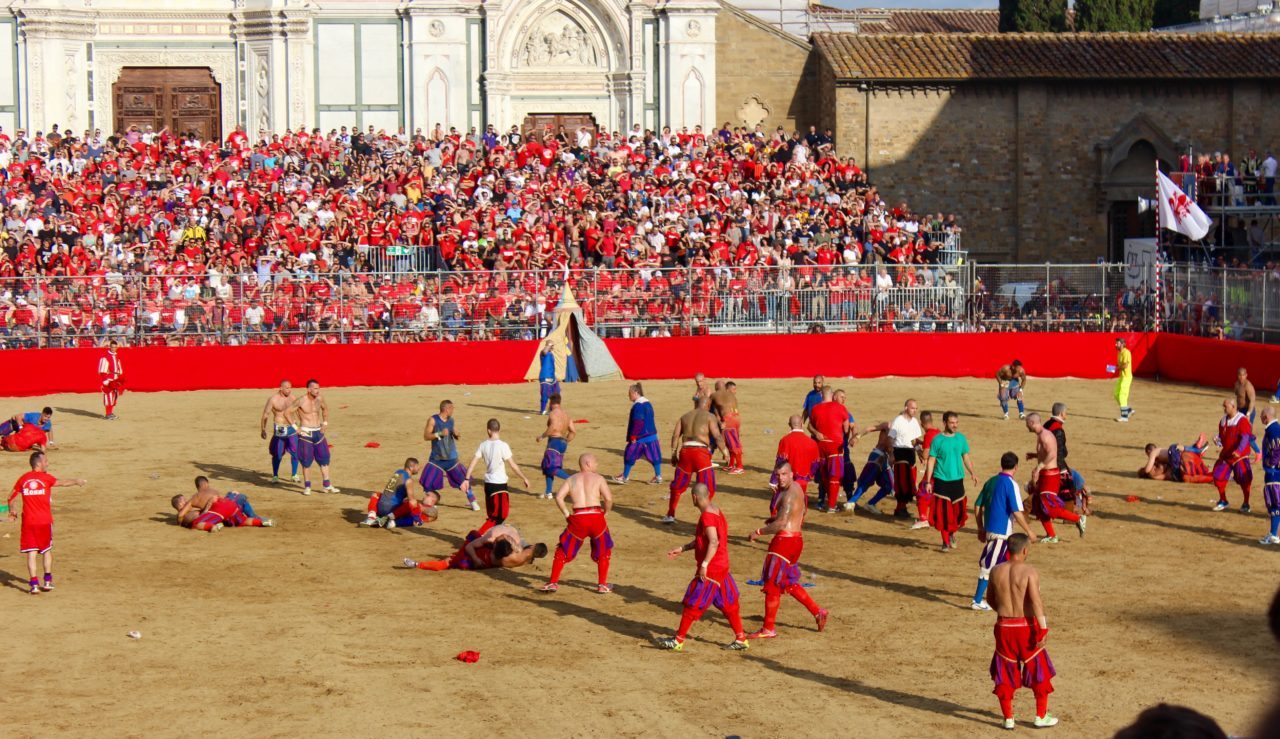
The literal translation is “historic soccer”, but it’s more of a cross between rugby and mixed martial arts. Calcio storico is one of Florence’s oldest traditions that dates back to the 16th century. Everything from the medieval outfits and traditional pregame parade, to the location it is played in Piazza Santa Croce, remains nearly the same as it did 500 years ago. As for the rules, well there aren’t many, just get the ball into the net and try not to get knocked out. Kicks, punches, tackles, body slams, throwing an opponent into the crowd – all fair game. As exhilarating the sport is to watch, it is undoubtedly violent and dangerous, especially considering that the players do not wear any sort of pads or protection.
The Four Teams
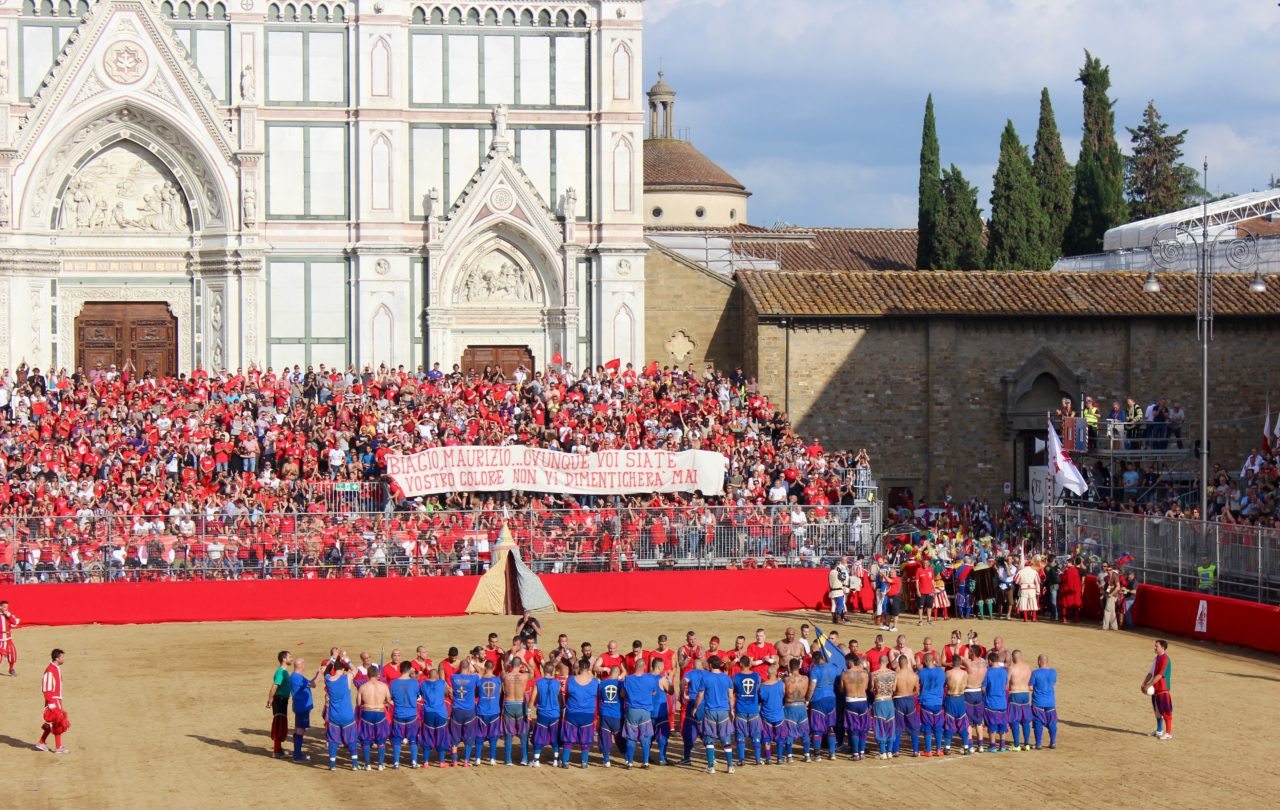
Besides the violent nature of the sport, what makes calcio storico particularly exciting is the sense of rivalry and competition between the four teams that participate. The four teams each represent a different quarter of Florence: Azzuri (Blues) represent the Santa Croce area, Rossi (Reds) represent the Santa Maria Novella area, Bianchi (Whites) represent the Santo Spirito area, and Verdi (Greens) represent the San Giovanni area. Only the tough and dedicated get the honor to represent their area. All their training and hard work culminates to one ferocious match that takes place only once a year. The winners of this match then advance to the finals, where they play for bragging rights and eternal glory (well at least till next year), oh and a free dinner.
Game Day
I was fortunate enough to be able to buy tickets (which sell out very fast) to one opening game, and somehow snuck into the finals (this is an incredible feat considering the amount of security present). A one block radius of barricades and security surrounds Piazza Santa Croce (where the arena is located), and no one is allowed to enter within the walls without a ticket. However, once inside you’ll find yourself in a sweaty mess of loud, drunk Italians who are ecstatic for game day!

Watching the pregame parade I felt like I was put into a time machine and sent back 500 years. This traditional ceremony featured a long procession of drummers, flag bearers, men on horseback (some in full armor), and others in different medieval get-ups. The best part, however, was undoubtedly the introduction of the two competing teams. As the players took the stage, fireworks were set off, colored smoke bombs filled the air, and the chants of fervent Italians roared throughout the arena. It was one of the more epic things I’ve seen, to say the least.

After the blast from the cannon, marking the start of the game, chaos ensued. As players scrambled to retrieve the ball, fists met faces, bodies hit the dirt, and blood was drawn. I saw one player injure his leg immediately and then continue to play the rest of the game on one foot. Substitutions and time-outs do not exist in calcio storico, therefore players only left the game if they were seriously injured. Because of this rule, players would be tended to in the middle of the game, amidst the craziness surrounding them. For example, it was normal to see a medic tend to a bloody nose of a player who is being held in a choke hold or for the referee to feed water to a player who is casually sitting on top of his opponent. These moments made the game rather amusing in ways that I wasn’t expecting.
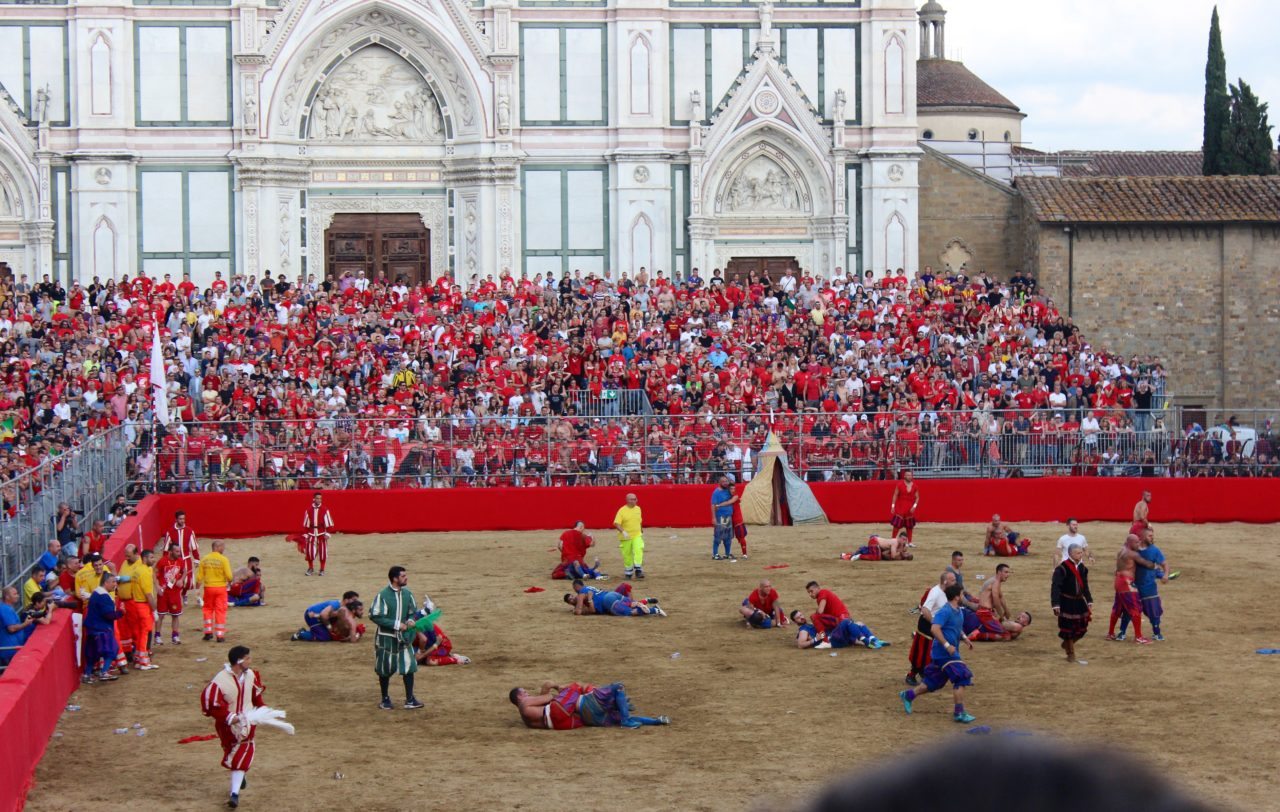
From emotional Italians yelling profanities at the opposing team, to mud-covered players being taken away on stretchers, calico storico is a spectacle to be seen. It’s a bucket-list item that is undeniably a great time. However, no words can truly describe the thrill and excitement of physically being at a game. If you haven’t already check out my calico storico experience in the video at the top of the page! If you are ever in Italy in June, I highly recommend attending a calico storico match.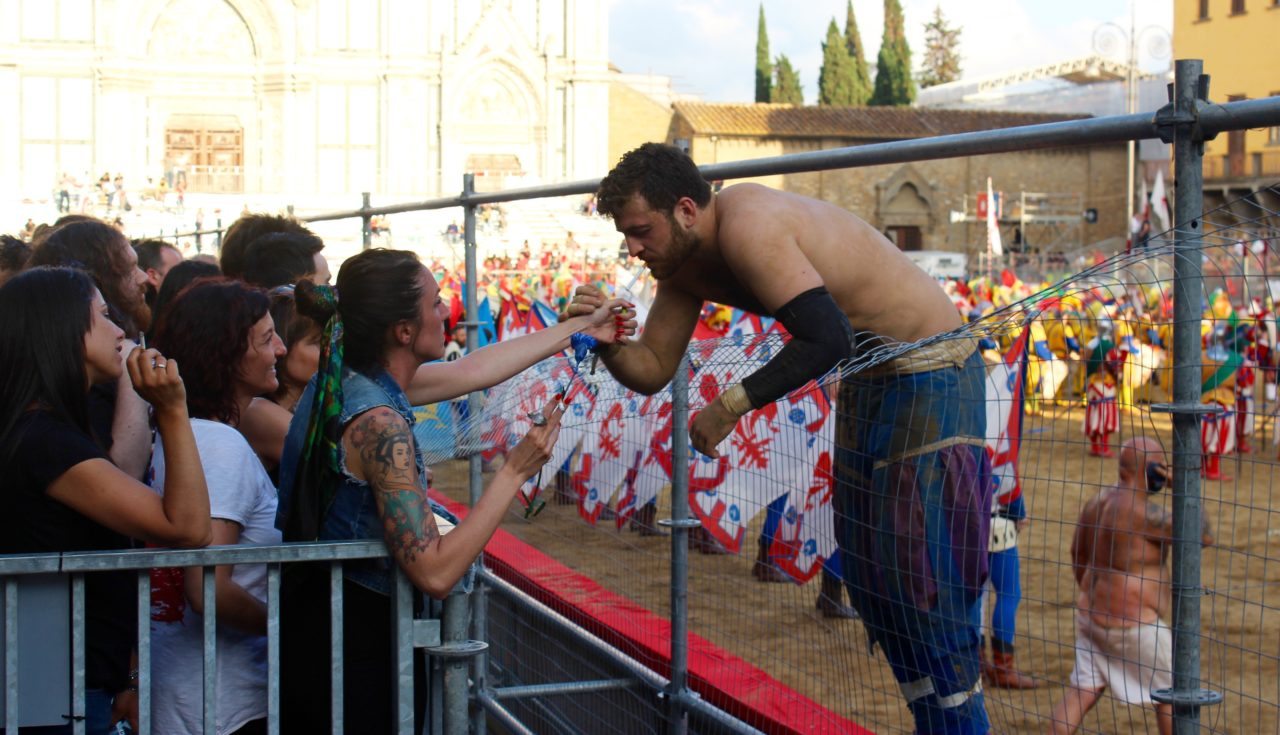
Have you attended a calcio storico event, or witnessed a similar tradition? If so, comment below!
 This guest post was written by Justin Hakim. Justin was born and raised in Southern California and spends most of my days thinking about food. His hunger for adventure and well, just hunger in general, brought him to Italy, where he spent a year living and working. You can follow him on Instagram @hakimthedream7.
To discover more about Florence, try reading:
- 30 Great Places To Eat & Drink In Florence
- Florence Finds: Colossal Statue Just A Bus Ride Away
- 5 Scenic Rooftop Bars To Hit In Florence